

Safety footwear – buyer guide
Safety Shoe Construction Guide: Toe Cap, Midsole and Outsole Choices
How EN ISO 20345 protection classes map to real working conditions, with the evidence to verify them.
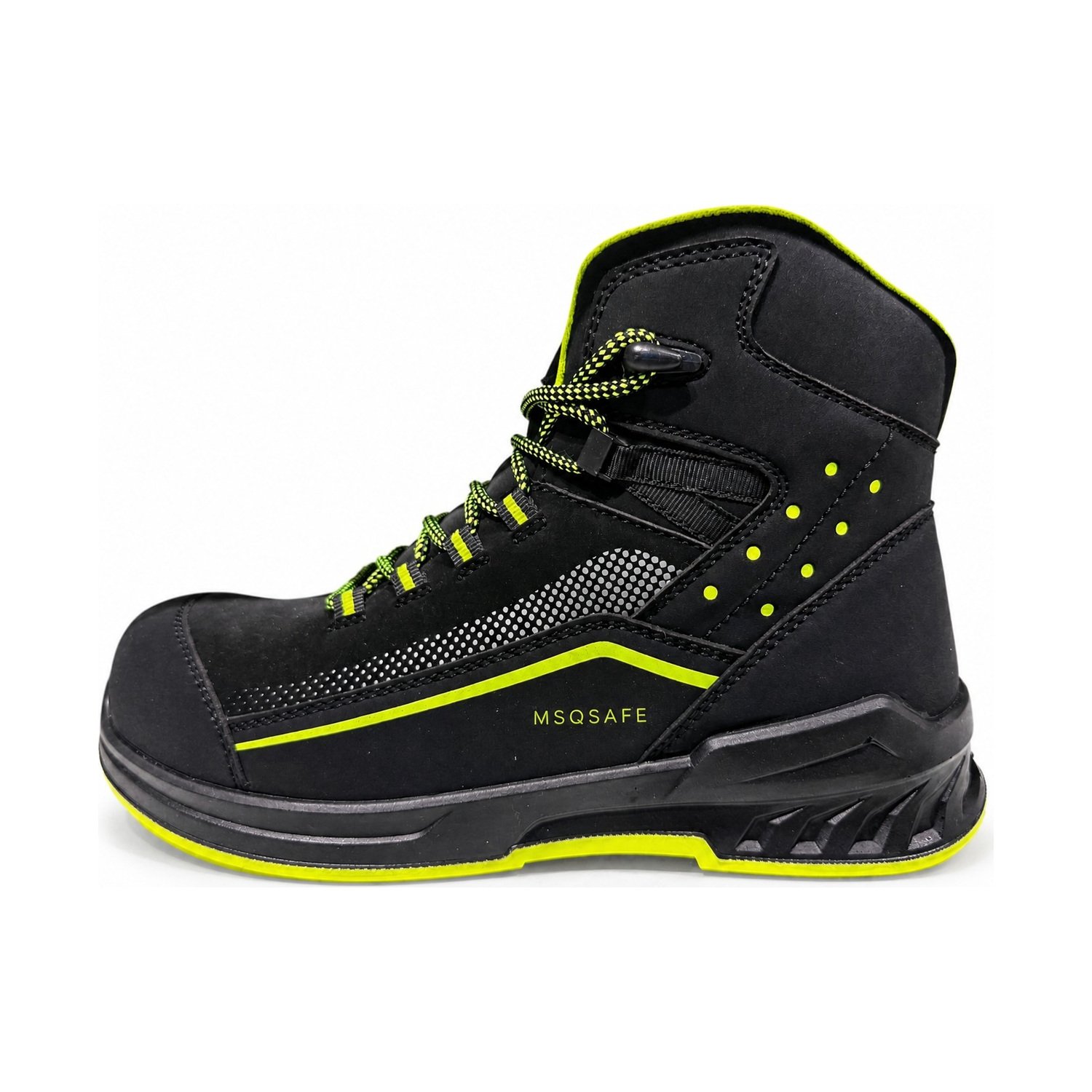
Direct answer: Safety footwear components should be chosen from the job-hazard brief, target market, fit and required model-level evidence. Toe-cap material, penetration-resistant layer and outsole construction affect weight, flexibility, internal space and manufacturing, but no component choice alone proves that the finished shoe meets a standard.
Begin with the workplace hazard brief
Record impact or compression exposure, sharp-object risk, wet or oily floors, heat or cold, chemicals, electrical considerations, walking distance and indoor or outdoor use. Then confirm the destination market and the exact evidence the buyer expects for the finished model.
Do not select construction from a generic safety-shoe label. A warehouse distributor, construction contractor and food-processing buyer can prioritize different combinations.
Compare toe-cap options
| Toe-cap family | Design consideration | Approval focus |
|---|---|---|
| Steel | Thin section and established manufacturing route | Weight, corrosion protection, edge treatment and fit |
| Composite | Nonmetal construction and different wall geometry | Internal volume, thickness, temperature exposure and consistency |
| Aluminum or alloy | Lower weight potential with material-specific forming | Profile, edge control, deformation and process compatibility |
Review penetration-resistant layers
Steel and textile-based midsoles influence flexibility, weight, coverage and lasting differently. Confirm the exact layer, size coverage, joining method and model construction. The required assessment belongs to the finished footwear and applicable method; component descriptions should not be treated as certification.
Specify outsole use conditions
State surface type, contamination, temperature, flexing, wear and cleaning conditions. Compare compound, tread geometry, density, hardness and bonding route using representative shoes. Slip, heat, oil or chemical statements require applicable model-level evidence and should not be inferred from tread appearance.
Approve the complete model and file
Evaluate fit with socks and all protective layers installed. Check toe clearance, flex point, heel hold, mass and walking comfort. Keep the bill of materials, drawings, markings, instructions, declarations and supporting evidence linked to the exact model and revision. Reassess affected requirements when a component or production site changes.
Frequently Asked Questions
Is a composite toe cap always lighter than steel?
Not always in the finished shoe; geometry, thickness and other components affect total weight.
Does a nonmetal midsole guarantee flexibility?
No. Layer construction, coverage, lasting and outsole design all influence flexibility.
Can component certificates approve a safety shoe?
No. Buyers need evidence applicable to the exact finished model and target market.
Why does toe-cap choice affect fit?
Different wall thickness and shapes change internal toe volume and upper pattern requirements.
What should a safety-shoe RFQ include?
Include hazard brief, destination market, size range, construction, component preferences, required documents, quantity and sample plan.
Request a Model-Specific Safety Footwear Quote
Send the workplace hazards, destination market, size range and document checklist. MSQ SAFE can organize construction options for buyer review.