
Footwear manufacturing
OEM Safety Footwear Manufacturing
Develop safety shoes and work boots from a reference or specification, with construction, materials and commercial terms confirmed in the project brief.
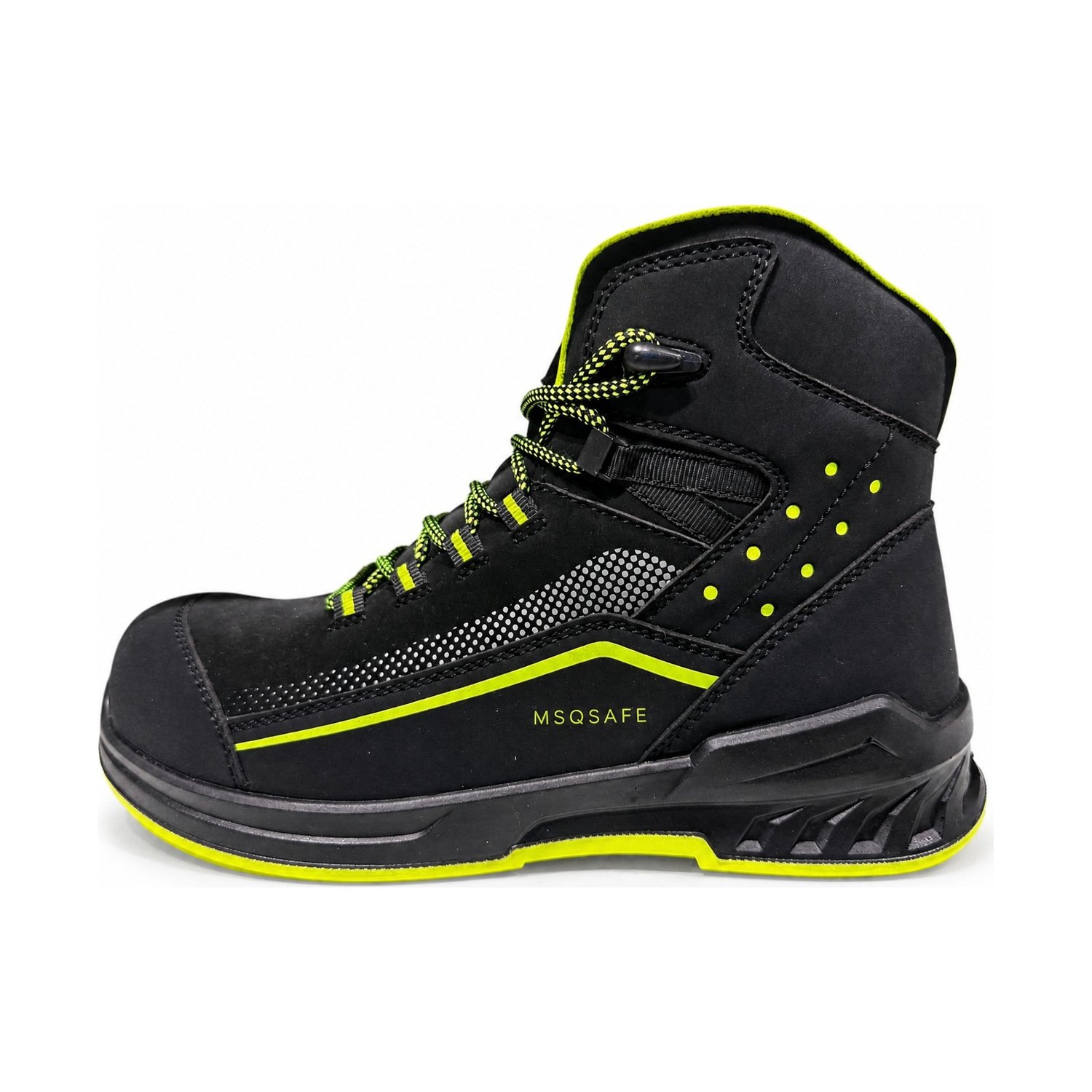
OEM safety footwear at MSQ SAFE turns your brief into a branded, saleable range: lasts and materials, protection class, colours, logo and retail packaging around your market — with sampling before bulk, and MOQ, lead time and documentation confirmed per style by quotation. We have manufactured safety footwear since 1998, so the conversation starts from production reality, not a product list.
Who This OEM Route Is For
This route serves footwear and PPE brands, distributors, wholesalers and retailers launching their own label, e-commerce sellers wanting an exclusive range, and procurement teams delivering client-branded contracts — buyers who intend to own the product, not just the purchase order.
- Private label on proven MSQ SAFE styles, or development from a reference model you supply.
- Custom lasts, upper materials, linings, midsoles and outsoles, with protection levels from S1P to S3, plus SRC, HRO, CI and EH — with ASTM F2413 options for North American programmes.
- Branding in the factory, not applied later: logo embossing or printing, custom colourways and retail packaging (boxes, inserts, labels).
- Size runs built for the destination market — EU, UK or US sizing with a realistic ratio.
What This Route Does Not Cover
- Design-agency work: we do not create brand artwork, file trademarks or write brand strategy.
- Reproduction of other brands’ trademarked models — we develop around your brief and standards compliance, not a competitor’s shoe.
- Final conformity assessment for your market: naming the notified body and managing market registration stays with you. What we confirm by SKU is the availability of declarations and test reports for the base model — see the conformity documents page.
- Published fixed MOQs or lead times: both are confirmed per style and construction in the quotation — they legitimately differ between a private-labelled style and a new-last development.
- One-off private orders or retail distribution by MSQ SAFE itself.
- OEM across other PPE categories is scoped separately through the OEM inquiry route.
The OEM Footwear Process
Six stages, each with a written deliverable — protecting the development budget on both sides.
1. Product brief & reference
Start from the OEM inquiry form or the RFQ form: reference model or target class, market, planned volume, price range and branding intent. If the protection class is not fixed, the EN ISO 20345 guide and the S1P vs S3 comparison map the options.
2. Model, last & document review
A feasibility review decides the fastest route: an existing last and construction, or a new last with tooling. Materials are examined — upper leathers, microfibre and mesh, linings, midsole boards, puncture-resistant inserts and outsole compounds — against the protection claim and the market’s climate. In parallel, the available documents for the base model are identified against the standards and directives for your market, and the test methods reviewed on the testing page.
3. Sample development & approval
Sample pairs are built with your colourway and logo. Timing, cost and approval criteria — fit, finish, materials, function — are confirmed in the quotation before development starts. Bulk production begins only after the sample or specification is approved.
4. Commercial confirmation
Per-style MOQ, unit price, tooling and sample costs, lead time, payment terms, packaging and the document package are confirmed in writing before production.
5. Production & quality control
Manufacturing in-house means the core processes — lasting, moulding, cutting and sewing — are run by us, not brokered. Material incoming checks are followed by in-line checks through upper preparation, lasting and sole attachment. The order-specific inspection plan (sampling level and checkpoints) is agreed before production and recorded in the order documents, with updates through the run.
6. Inspection, documents & shipping
Pre-shipment inspection runs to the agreed plan, with third-party inspection access where agreed in the quotation. Packing, marking and export documents are prepared per style, and the shipment releases against the confirmed milestone. If you are new to selection, the construction buyer’s guide and the safety footwear range are good starting points.
OEM Confirmation Sheet
The working checklist for an OEM programme — every row confirmed in writing at the stage shown.
| Item | What is confirmed | When |
|---|---|---|
| Brief & reference | Reference model, protection class, market, volume, price target | Stage 1 |
| Lasts & construction | Existing or new last; upper, lining, midsole, outsole, toe cap | Model & last review |
| Standards & documents | EN ISO 20345 / ASTM F2413 class; available reports and declarations | Document review |
| Branding & packaging | Logo method, colourways, box / insert / label specification | Sample stage |
| Size run & ratio | EU / UK / US sizes and per-market size ratio | Commercial confirmation |
| Commercials | MOQ per style, unit price, tooling, sample costs, lead time, payment | Commercial confirmation |
| QC & inspection | Sampling level, checkpoints, third-party inspection access | Before production |
| Shipping & docs | Packing, marking, export documents, delivery milestone | Final stage |
Information the Buyer Must Provide
- Target market and the standard or tender clause it triggers — EN ISO 20345 for Europe, ASTM F2413 for North America, or a market-specific requirement.
- A reference model, photos, a specification sheet or sample pair — the more concrete, the faster the review.
- Planned volume per style and the size ratio you intend to sell.
- Target price point and desired lead time window.
- Brand assets: logo files, colour codes (Pantone or similar) and packaging artwork or samples.
- The document package: declarations, test reports, inspection reports, buyer-specific paperwork.
- Delivery destination and preferred Incoterms.
Risk & Change Control
- New lasts and tooling add development time and cost — both are quoted and confirmed before the work starts, never after.
- Material or colour substitutions change price and availability; the change is re-quoted, not absorbed.
- Branding changes after sample approval affect the schedule; they are recorded and the milestone re-set in writing.
- Standards revisions are re-checked against the target market at order time, and the class and documents re-confirmed.
- Size-ratio changes at production release can cross the MOQ or pricing tier; the commercial confirmation is revised accordingly.
- Every change is logged and signed off before execution.
OEM Safety Footwear FAQs
What is the MOQ for OEM safety footwear?
MOQ is confirmed per style and construction in the quotation, depending on the last (existing or new), materials, branding method and packaging — we quote per programme rather than publishing one number.
Can we develop a completely new model from scratch?
Yes — new lasts and tooling are in scope. Feasibility, development time and cost are confirmed at the model and last review, before sample work begins.
Will test reports and declarations carry our brand?
Document naming rules depend on the standard and market; we confirm what is available for the base model by SKU, and you verify naming and notified-body requirements with your market authority. See the conformity documents page for how we scope evidence.
How do samples work for branded footwear?
Sample pairs use your colourway and logo; timing and cost are confirmed in the quotation, and the approved sample becomes the bulk reference. The policy is on the sample request page.
Can we start with an existing style and simply brand it?
Yes — the fastest route to market. Existing MSQ SAFE styles can be private-labelled with your colours, logo and packaging, with the shortest MOQ path since the last and tooling already exist.
Do you handle ASTM F2413 programmes for the US market?
Yes — ASTM F2413 options are confirmed by SKU alongside EN ISO 20345 lines, including US-market size runs. The two standards are not interchangeable, so state the target market in the brief.
Where is the footwear manufactured?
In our own factory in Wenzhou, China, with lasting, moulding, cutting and sewing in-house. Factory details and production scope are confirmed per programme. Contact details are on the contact page.
Start an OEM Footwear Project
Describe the project — reference model, market, volume and branding — in the OEM inquiry form, or send the same details through the RFQ form for a documented quotation. Review the base styles in the product catalogue and the safety footwear range, read the standards guide to pin the class, and arrange samples for the shortlisted models. The export team aims to reply within one business day.