

Safety footwear – buyer guide
S1P vs S3 Safety Shoes: What’s the Difference?
How EN ISO 20345 protection classes map to real working conditions, with the evidence to verify them.
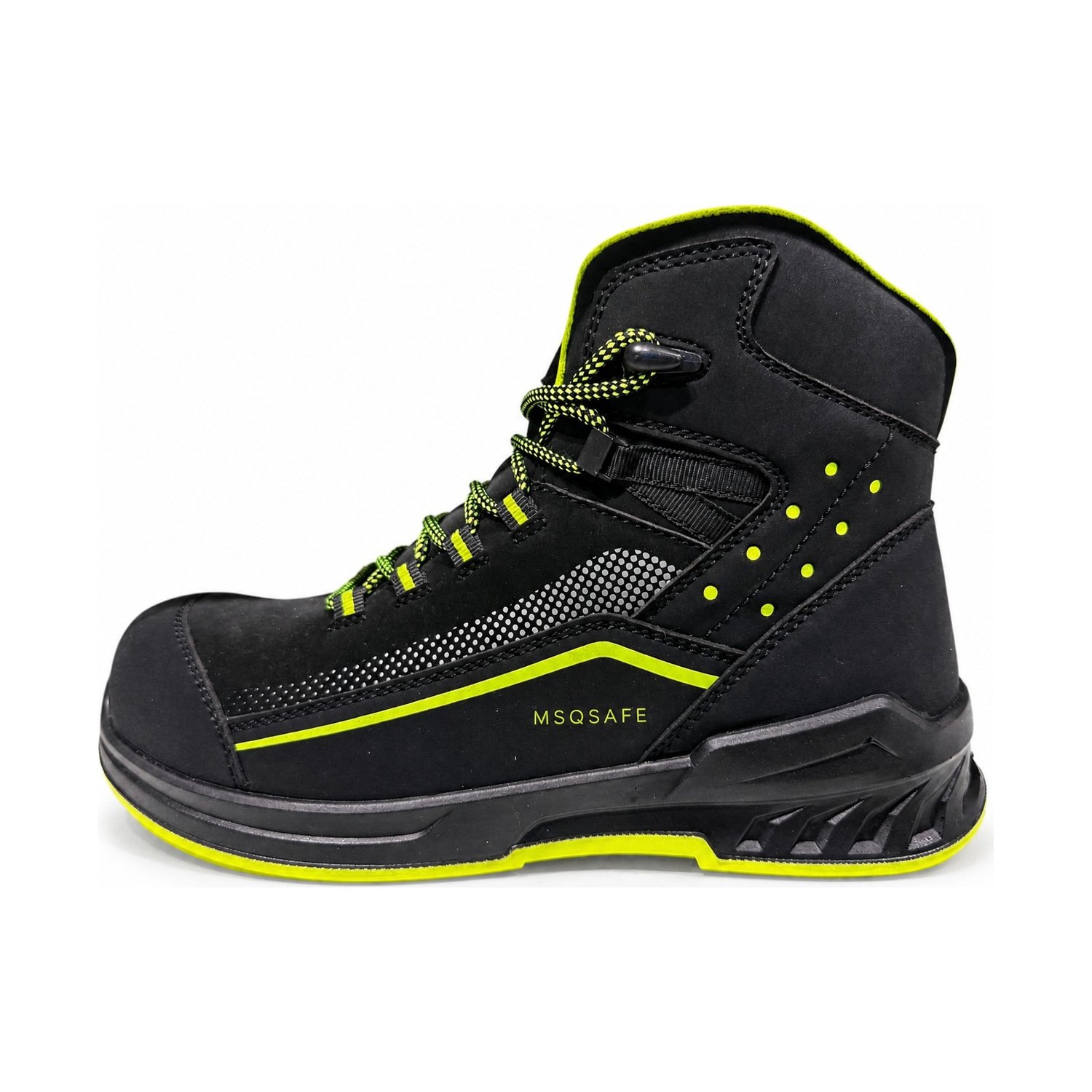
Short answer: S1P and S3 safety shoes both provide the same toe and puncture protection under EN ISO 20345 — the difference is the upper. S3 adds water resistance and a water-repellent upper, making it the right choice for wet outdoor work; S1P is lighter and more breathable, best for dry indoor environments like warehouses and assembly lines.
What Do S1P and S3 Mean?
Under the EN ISO 20345:2022 standard, safety footwear is classified by protection level. The letters and numbers tell a precise story:
- S — Safety footwear with a toe cap (200 joule impact, 15 kN compression).
- 1 — Closed heel, energy-absorbing heel region, and anti-static properties.
- P — Puncture-resistant midsole (protects against nails and sharp objects).
- 2 — Everything in level 1, plus a water-resistant upper.
- 3 — Everything in level 2, plus a water-repellent upper and a tread-resistant outsole.
S1P vs S3: Side-by-Side Comparison
| Feature | S1P Safety Shoes | S3 Safety Boots |
|---|---|---|
| Toe protection (200J / 15kN) | Yes | Yes |
| Anti-puncture midsole | Yes | Yes |
| Anti-static properties | Yes | Yes |
| Energy-absorbing heel | Yes | Yes |
| Water-resistant upper | No | Yes |
| Water-repellent upper | No | Yes |
| Tread-resistant outsole | Optional | Yes |
| Typical weight (size 42) | ≈ 450–500 g | ≈ 600–700 g |
| Typical use | Dry indoor: warehouses, assembly, logistics | Wet/outdoor: construction, mining, road work |
Which One Does Your Workforce Need?
Choose S1P when…
- The workplace is dry and indoors (warehouses, production lines, light assembly).
- Comfort and all-day wear matter more than waterproofing.
- You need airport-secure, metal-free options for logistics and aviation.
Choose S3 when…
- Work happens outdoors or on wet surfaces (construction, mining, agriculture).
- Water, mud or chemicals can reach the shoe upper.
- You need the tread resistance of a dedicated boot outsole on slippery ground.
Frequently Asked Questions
Can S1P shoes be used outdoors?
Yes, in dry conditions. S1P shoes are not water-resistant, so rain or wet ground will soak the upper and shorten its life. For outdoor or wet environments, S3 is the correct specification.
Is S3 always safer than S1P?
No. Both offer identical toe and puncture protection under EN ISO 20345. S3’s advantages are water resistance and tread — not higher impact protection. The “right” level depends on the environment, not a safety hierarchy.
Do S1P and S3 include anti-static properties?
Yes. Both classes include anti-static properties and energy absorption at the heel as part of the “1” designation under EN ISO 20345:2022.
Can I order both S1P and S3 under my private label?
Yes. MSQ SAFE manufactures S1P and S3 footwear with OEM branding, custom colors and materials, from 300 pairs per style. Request a quote with your workforce profile for a recommendation.
Bottom Line
Match the class to the environment: S1P for dry indoor operations, S3 for wet or outdoor work. Both deliver certified toe and puncture protection — and both are available as OEM or private label from MSQ SAFE. See our safety footwear range or request samples to evaluate quality firsthand.