
Buyer resources
PPE Standards & Directives
Understand how product standards relate to hazards, test methods, declarations and market-specific procurement.
This page explains the European and American standards MSQ SAFE products are manufactured to: what each marking guarantees, how the classes compare, and how documentation is confirmed for the selected SKU and destination market. Find your category below, check the classes and markings, then verify the test report at the quotation stage.
How to Read This Page
Every MSQ SAFE product is manufactured to one of the standards below; the badge marks the ones we work to. This page explains what each marking guarantees, so you can specify the right protection level and check any supplier’s claim against the test it is based on. Applicability is always confirmed by SKU and destination market — test methods, certificates and report types for your model are confirmed before production, as described on Testing & Test Reports and Standards & Conformity Documents.
Safety Footwear
EN ISO 20345:2022 We manufacture to this
The European standard for safety footwear with a toe cap that withstands a 200 joule impact and 15 kN compression. The 2022 revision introduced the SR slip-resistance code and the PL/PS perforation-resistance codes for non-metallic inserts. Under the 2022 edition (amended by A1:2024) SRA, SRB and SRC are no longer used — they are legacy 2011-edition markings — so check which edition a product certificate identifies.
| Class / code | Meaning |
|---|---|
| SB | Basic requirement: 200J toe cap. |
| S1 | SB + closed heel, antistatic, energy-absorbing heel. |
| S1P | S1 + penetration-resistant midsole (1100N). |
| S2 | S1 + water penetration and absorption resistance of the upper. |
| S3 | S2 + penetration-resistant midsole + cleated outsole. |
| SR | Additional slip resistance: ceramic tile with glycerine, on top of the basic slip test (2022 edition). SRA/SRB/SRC are legacy 2011-edition markings. |
| HRO | Outsole resistant to contact heat of 300°C for 60 seconds. |
| CI / HI | Cold insulation / heat insulation of the sole complex. |
| EH | Electrical hazard protection (ASTM equivalent). |
| WRU | Water resistance of the upper leather. |
Practical guidance: S1P vs S3 Safety Shoes, EN ISO 20345 Explained and the construction selection framework. Models: safety footwear.
EN ISO 20344 We manufacture to this
The companion test-method standard. It does not classify footwear; it defines HOW every property in EN ISO 20345 is measured — toe-cap impact, midsole penetration, slip resistance, leakproofness, energy absorption and sole adhesion.
ASTM F2413 We manufacture to this
The US specification for protective footwear. Marking reads, for example, ASTM F2413-18 M I/75 C/75 EH — meaning male, impact 75 ft-lbs, compression 75, electrical hazard rated. It is not interchangeable with EN ISO 20345; buyers selling into North America should specify it explicitly.
Hand Protection
EN 388:2016+A1:2018 We manufacture to this
Mechanical risk gloves. The pictogram carries up to six characters: abrasion (1-4), coupe cut (1-5), tear (1-4), puncture (1-4), TDM cut level (A-F) and impact protection (P). Since the 2016 revision the TDM-100 test takes precedence when the coupe blade is blunted by the material.
| Code | Meaning |
|---|---|
| Abrasion 1-4 | Cycles to break-through: 100 / 500 / 2000 / 8000. |
| Cut A-F | TDM-100 test, newtons: A=2N up to F=30N. |
| Tear 1-4 | Force to tear, newtons: 10 / 25 / 50 / 75. |
| Puncture 1-4 | Force to puncture, newtons: 20 / 60 / 100 / 150. |
| P | Impact protection to EN 13594 has been passed. |
Read the code with EN 388 Cut Levels Explained; models in hand protection.
EN ISO 374-1:2016 We manufacture to this
Chemical protective gloves. Type A, B or C indicates how many test chemicals achieved at least the stated breakthrough performance level — Type A six chemicals, Type B three, Type C one. The old ‘beaker’ pictogram was replaced by the Erlenmeyer flask.
ANSI/ISEA 105 & 138 We manufacture to this
The North American equivalents. ANSI/ISEA 105 grades cut resistance A1 to A9, and ANSI/ISEA 138 grades back-of-hand impact protection level 1 to 3. Buyers in the US usually quote A-levels rather than EN 388 cut letters.
Head Protection
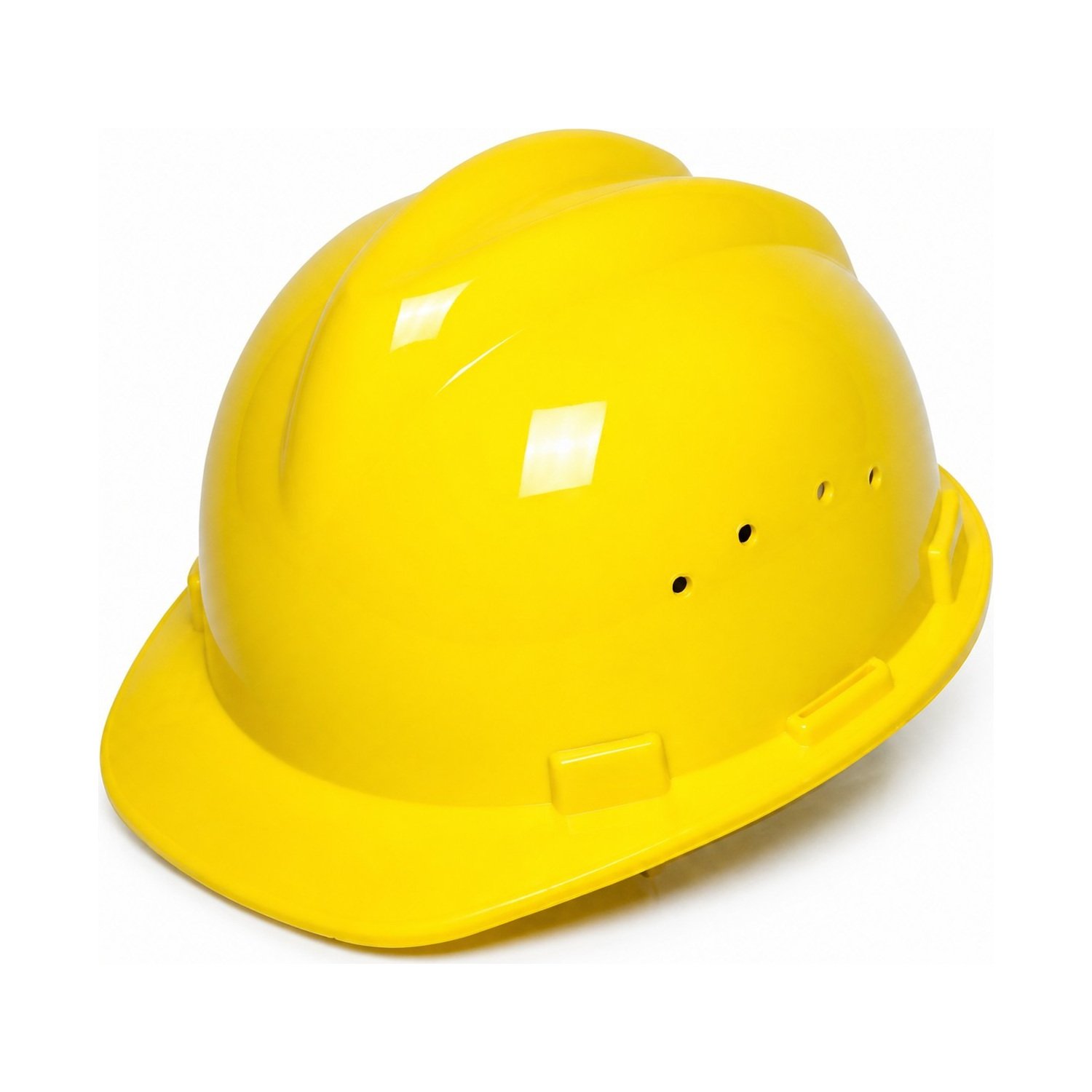
EN 397:2012+A1:2012 We manufacture to this
Industrial safety helmets. Mandatory requirements cover shock absorption, penetration resistance, flame resistance and chin-strap anchorage release between 150 and 250 N. Optional marks are the ones buyers should specify explicitly.
| Optional mark | Meaning |
|---|---|
| -30°C / -20°C | Tested at very low temperature. |
| +150°C | Tested at high ambient temperature. |
| 440 V a.c. | Electrical insulation for accidental contact. |
| LD | Lateral deformation resistance. |
| MM | Resistance to molten metal splash. |
EN 12492 We manufacture to this
Mountaineering-style helmets, increasingly specified for work at height because the chin strap is designed NOT to release under load — the opposite of EN 397. Do not substitute one for the other without a risk assessment. Full comparison: EN 397 vs EN 12492; models in head protection.
Eye & Face Protection
EN 166:2001 We manufacture to this
The framework standard for personal eye protection. The marking is split between the lens and the frame: the lens carries optical class and impact symbol, the frame carries the field of use.
| Mark | Meaning |
|---|---|
| Optical class 1 | Suitable for continuous, all-shift wear. |
| F / B / A | Impact energy: 45 m/s / 120 m/s / 190 m/s. |
| 3 / 4 / 5 / 9 | Liquids / large dust / gas & fine dust / molten metal. |
| K / N | Resistance to surface damage / resistance to fogging. |
EN 170 & EN 172 We manufacture to this
Ultraviolet filters (EN 170) and sunglare filters for industrial use (EN 172). The scale number before the dash indicates the filter type; the number after it indicates the shade. Models: eye & face protection.
High-Visibility Clothing
EN ISO 20471:2013+A1:2016 We manufacture to this
High-visibility warning clothing. The class is decided by the minimum area of fluorescent background and retro-reflective material, not by the colour alone. Garment class also depends on how the garment is worn as an ensemble.
| Class | Minimum material area |
|---|---|
| Class 1 | 0.14 m² background, 0.10 m² reflective — lowest risk. |
| Class 2 | 0.50 m² background, 0.13 m² reflective. |
| Class 3 | 0.80 m² background, 0.20 m² reflective — highest visibility, required near fast traffic. |
| Wash cycles | Performance must be declared after a stated number of washes. |
EN 343 We manufacture to this
Protective clothing against rain. Two figures are declared: water penetration resistance (class 1-4) and water vapour resistance, i.e. breathability (class 1-4). A high waterproof class with a low breathability class is uncomfortable for full shifts.
Respiratory Protection
EN 149:2001+A1:2009 We manufacture to this
Filtering half masks against particles. FFP1 filters at least 80% of airborne particles, FFP2 at least 94% and FFP3 at least 99%. The R mark means the mask is reusable across shifts, NR means single shift only, and D means it passed the dolomite clogging test.
| Mark | Meaning |
|---|---|
| FFP1 | ≥80% filtration, total inward leakage ≤22%. |
| FFP2 | ≥94% filtration, total inward leakage ≤8%. |
| FFP3 | ≥99% filtration, total inward leakage ≤2%. |
| NR / R | Single shift only / reusable. |
| D | Passed the dolomite dust clogging test. |
GB 2626-2019 We manufacture to this
The Chinese standard for particulate respirators, where KN90, KN95 and KN100 correspond to 90%, 95% and 99.97% filtration of non-oily particles. KN95 is broadly comparable to FFP2 but the fit-test protocols differ, so the two marks are not legally interchangeable.
Hearing Protection
EN 352-1 and EN 352-2 We manufacture to this
Part 1 covers earmuffs, part 2 covers ear plugs. Attenuation is published as SNR (single number rating) plus H, M and L values for high, medium and low frequency noise. Selecting on SNR alone can over-protect and cut off warning signals.
| Rating | Meaning |
|---|---|
| SNR | Single number rating in dB, subtracted from the measured noise level. |
| H / M / L | Attenuation at high / medium / low frequencies. |
| NRR | The US equivalent rating used with ANSI S3.19. |
Models: hearing protection.
Fall Protection
EN 361 We manufacture to this
Full body harnesses. Only a harness conforming to EN 361 may be used for fall arrest; work-positioning belts to EN 358 and sit harnesses to EN 813 are not fall-arrest devices on their own. Attachment points are marked with a capital A.
EN 355 We manufacture to this
Energy-absorbing lanyards. The absorber must limit the arrest force on the body to 6 kN or less, and the total length of lanyard plus absorber plus connectors must not exceed 2 m.
EN 1891 We manufacture to this
Low-stretch kernmantle rope for rope access. Type A ropes are for general access and rescue, type B ropes have a lower performance and a smaller minimum diameter. Fall-arrest lanyards must never be improvised from EN 1891 rope.
EN 362 We manufacture to this
Connectors and karabiners. Class T is a termination connector, class A an anchor connector, class M a multi-use connector. All must have a self-closing and self-locking gate for fall arrest.
Quick Comparison: Hazard → Standard → What to Check
Move from the worksite hazard to the standard, the class or marking to verify, and the page explaining it.
| Hazard | Standard(s) | Class / marking to verify |
|---|---|---|
| Impact on feet | EN ISO 20345 / ASTM F2413 | SB–S3; I/75 C/75 (US) |
| Slips on wet / steel surfaces | EN ISO 20345 | SR (2022); SRA/SRB/SRC legacy 2011 |
| Cuts from sharp edges | EN 388 / ANSI/ISEA 105 | TDM A–F; ANSI A1–A9 |
| Falling objects (head) | EN 397 / EN 12492 | Strap release vs retention |
| Airborne particles | EN 149 / GB 2626 / 42 CFR 84 | FFP1–3, NR/D; KN95; N95 |
| Low visibility near traffic | EN ISO 20471 | Class 1–3 + wash cycles |
| Fall from height | EN 361 / EN 355 / EN 362 | A-points; lanyard ≤2 m; clearance |
What Buyers Should Confirm (SKU & Market)
Applicability and documentation are confirmed per SKU and destination market. Before ordering, confirm:
- Standard edition. Which edition applies to the SKU (e.g. EN ISO 20345:2022) and whether your market accepts it.
- Conformity documents. Certificates, declarations and test reports are confirmed by model and market — see Standards & Conformity Documents and Testing & Test Reports.
- Test scope and QC plan. The applicable EN or ASTM method and report type are confirmed for the SKU before order; incoming, in-line, pre-shipment sampling (AQL when specified) and acceptance criteria can be agreed per order — see Quality Control by Product & Order.
- Marking, branding and commercials. Language, size ranges, optional markings (e.g. -30°C, HRO, D), private label — see Private Label PPE and OEM inquiry; MOQ, lead time and incoterms via Request a Quote (target reply: one business day).
Related Buyer Guides
Plain-language companions to every standard above live in the PPE Knowledge Center:
- S1P vs S3 Safety Shoes: What’s the Difference?
- EN ISO 20345 Explained: Safety Shoe Rating Guide
- How to Choose Safety Shoes for Construction Workers
- EN 388 Cut Levels Explained: A to F Guide
- EN 397 vs EN 12492: Which Safety Helmet?
- FFP1, FFP2, FFP3: Respirator Selection Guide
- Hi-Vis Class 1, 2 or 3: EN ISO 20471 Guide
- How to Calculate Fall Clearance: EN 355 Guide
Sector guidance (construction, oil & gas, road work and more): industry pages. Full range: shop.
Frequently Asked Questions
Is every MSQ SAFE product certified to all the standards on this page?
No. Each standard listed is one we manufacture to, but which apply depends on the SKU and destination market. Applicability, certificates and test reports are confirmed for the selected model before production — state product, quantity and market in your quote request.
Do I need EN or ASTM/ANSI certification for my market?
Europe generally requires CE-marked EN standards; North America requires ASTM (footwear) and ANSI/ISEA (gloves) markings. The systems are not interchangeable — specify the certification your market accepts and confirm the edition.
Are test reports available before I place an order?
Available test reports and conformity documents are confirmed by SKU and market. Indicate the certification requirement in the quote request or via Testing & Test Reports, and they are prepared with the quotation.
What does “We manufacture to this” mean on this page?
It means the standard is part of the production and verification basis for the relevant products — not that every catalogue item carries every marking. The SKU, its marking and its documents are confirmed per order.
Do the 2022 revisions change what I should specify?
For footwear, EN ISO 20345:2022 introduced the SR slip-resistance code and the PL/PS perforation codes for non-metallic inserts; the older SRA, SRB and SRC slip markings are no longer used in this edition. For gloves, EN 388:2016+A1:2018 made the TDM (A–F) cut value governing when the Coup blade is blunted. Reference the current edition on the test report.
Are FFP2 and KN95 or N95 interchangeable?
No. FFP2 (EN 149), KN95 (GB 2626) and N95 (42 CFR 84) sit in a similar band but are certified under different regulations with different test aerosols. Confirm which certification your market requires.
Not sure which class you need? Tell us the job, the hazard and the destination country. We reply within one business day with the protection class, matching models and test reports — Ask our technical team · WhatsApp