

Safety footwear – buyer guide
How to Choose Safety Shoes for Construction Workers
How EN ISO 20345 protection classes map to real working conditions, with the evidence to verify them.
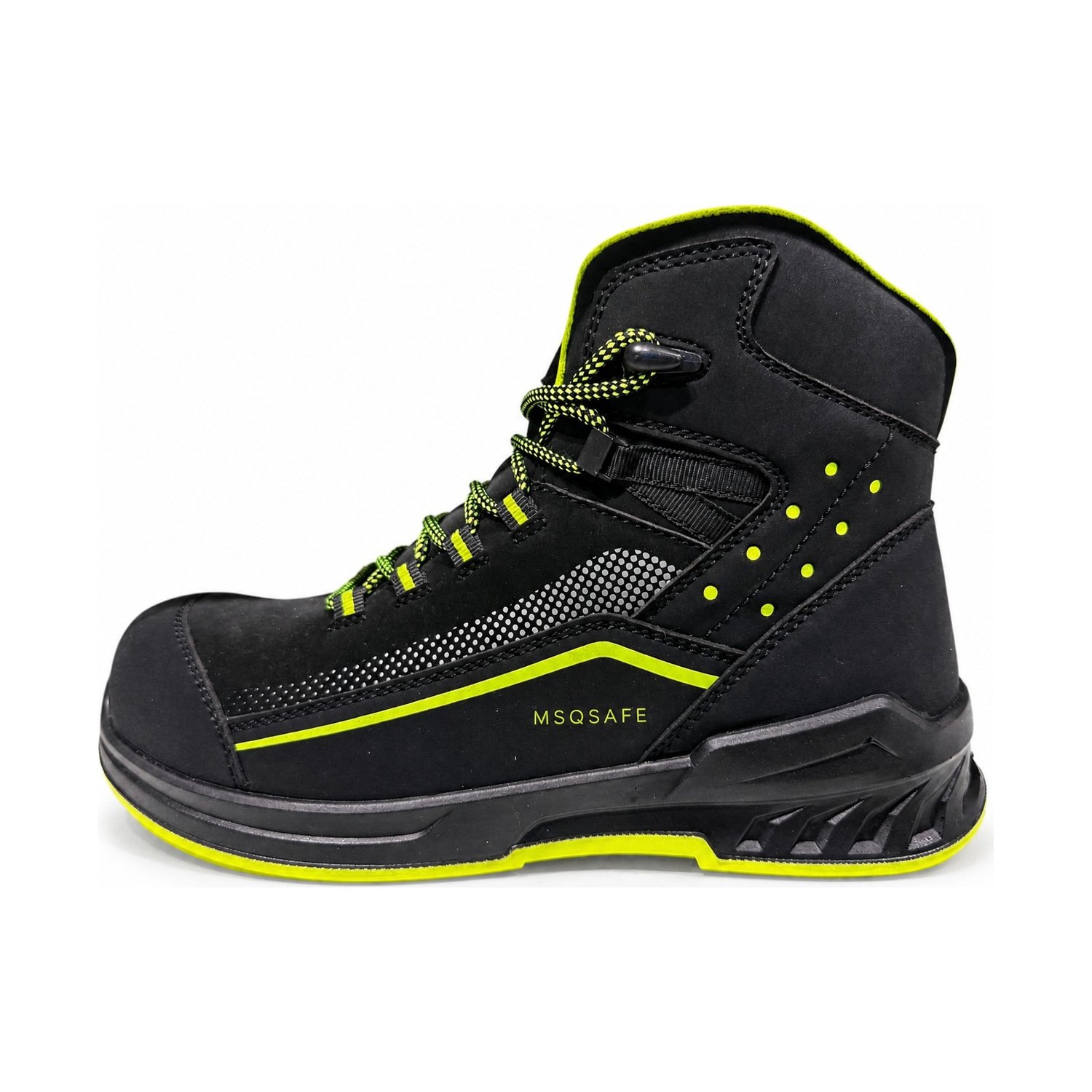
Short answer: Choose construction safety shoes in five steps — assess the site’s hazards, select a protection class (S1P for dry indoor, S3 for wet/outdoor), pick the toe material (steel for max protection, composite for lighter metal-free), verify EN ISO 20345 certification documents, then match comfort and budget through sampling before bulk ordering.
Step 1: Assess the Site Hazards
Different trades on the same site need different footwear. Build the specification from the actual risks:
- Impact and compression (falling objects, machinery) → certified toe cap required.
- Puncture (nails, rebar, debris) → puncture-resistant midsole (class P).
- Wet conditions / rain → water-resistant or water-repellent upper (class 2/3).
- Slips on wet or oily surfaces → SRC-rated outsole.
- Cold storage / winter → cold-insulated (CI) boots.
- Electrical work → electrical hazard (EH) rated footwear.
Step 2: Choose the Protection Class
Under EN ISO 20345, most construction roles settle on one of two classes:
- S1P — dry indoor work: scaffolds, formwork, finishing trades. Lightweight and breathable.
- S3 — wet or outdoor work: foundations, groundworks, utilities. Waterproof and tread-resistant.
For heavy site conditions, specify S3 with SRC — the combination covers most construction site requirements.
Step 3: Steel Toe or Composite Toe?
| Factor | Steel Toe | Composite Toe |
|---|---|---|
| Impact protection | Excellent | Excellent (200J) |
| Weight | Heavier | Lighter |
| Conductivity | Conductive (cold in winter) | Non-metallic, low conductivity |
| Metal detectors / airport | Triggers | Passes |
| Typical use | Heavy construction, mining | Logistics, multi-trade, comfort-first crews |
Step 4: Verify Certification & Documentation
Do not accept claims at face value. Before bulk ordering, request:
- Certificate of conformity to EN ISO 20345:2022 (or ASTM F2413 for US sites).
- Independent test reports for the exact model and safety level.
- Confirmation that the delivered batch matches the certified model (same upper, sole, toe cap).
Step 5: Sample Before You Scale
Comfort drives compliance — workers stop wearing shoes that hurt. Order samples in the most common sizes, test them on-site for two weeks, and check fit, weight, breathability and slip performance before committing to a container. Most serious suppliers, including MSQ SAFE, deduct sample costs from the first bulk order.
Buying Checklist for Procurement Teams
- Class matched to environment (S1P vs S3)
- Toe material decided (steel vs composite)
- SRC slip rating where floors are wet/oily
- Certification documents verified
- Sample program completed before bulk order
- MOQ, lead time and OEM branding confirmed
Frequently Asked Questions
Do construction workers need S3 or is S1P enough?
S1P and S3 offer identical toe protection (200 J) and puncture resistance. The deciding factor is water: S3 adds a water-resistant upper and a tread-patterned outsole, S1P does not. For outdoor sites, groundworks and any job involving wet concrete or mud, specify S3. S1P is appropriate for covered sites, fit-out work and indoor construction where the floor stays dry.
How long do safety boots last on a construction site?
There is no certified service life, because wear rate depends entirely on the surface and the hours worked. In practice, general construction use commonly gives six to twelve months before the outsole tread or the upper fails. Replace immediately if the toe cap has taken a significant impact, if the midsole is exposed, or if the tread is worn smooth — the slip rating no longer applies once the pattern is gone.
What documents should I request before placing a bulk order?
Ask for the EU type-examination certificate issued by a notified body, the test report behind it, and the EU Declaration of Conformity. Check that the model and the class code on the certificate match the product you are quoting, and that the certificate is current. A CE mark on the box without supporting documents is not evidence of compliance.
Get Started
MSQ SAFE supplies certified S1P and S3 construction safety boots with full documentation, from stock or OEM production. View construction safety footwear, request samples, or send your specification — our team will confirm the right class within 24 hours.