

Safety footwear – buyer guide
EN ISO 20345 Explained: Safety Shoe Rating Guide
How EN ISO 20345 protection classes map to real working conditions, with the evidence to verify them.
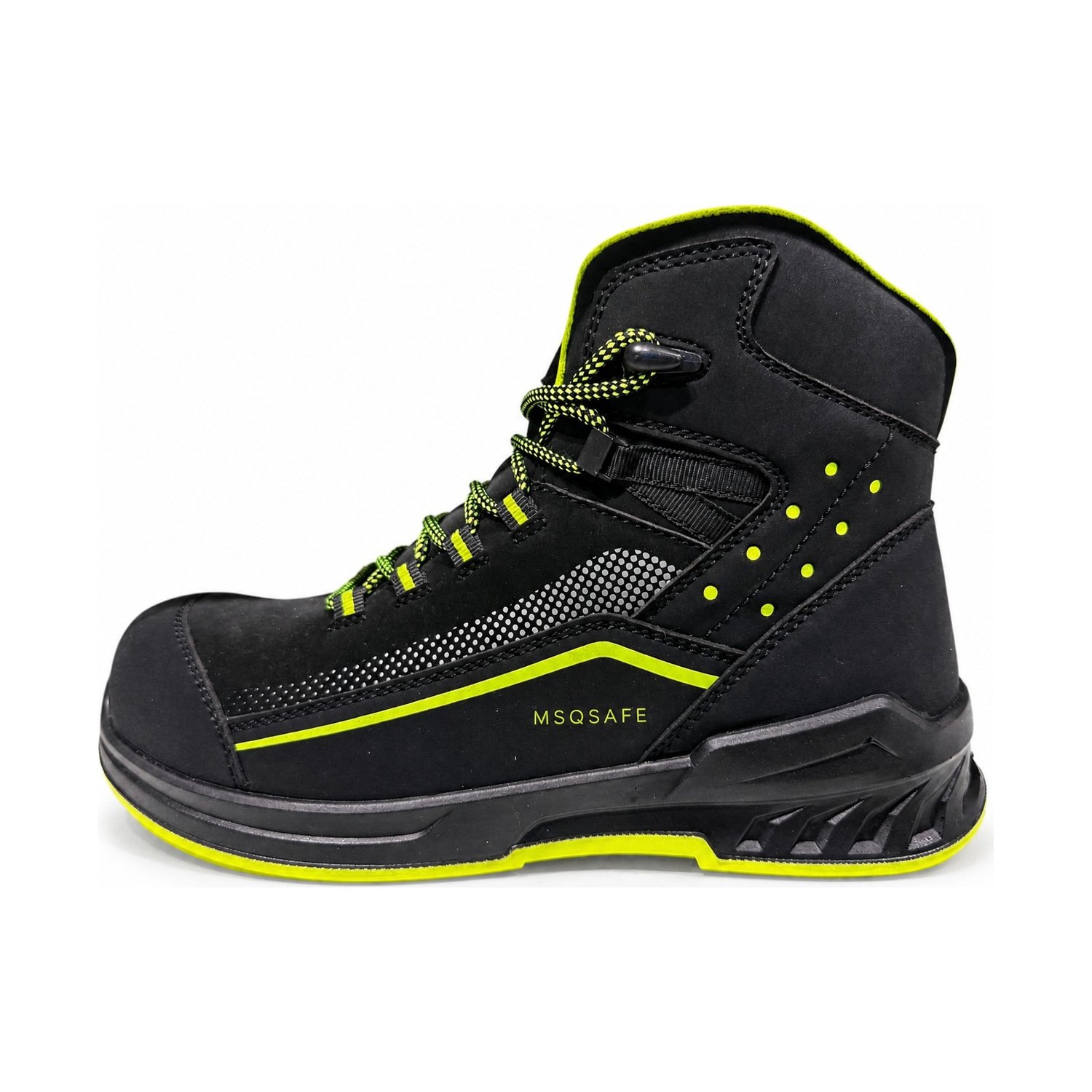
Short answer: EN ISO 20345 is the international standard for safety footwear, defining protection classes from SB (toe protection only) up to S3 (toe, puncture, water resistance and tread). The class you need depends on your workplace risks — matching the class to the environment is the first step of any safety shoe specification.
What Is EN ISO 20345?
EN ISO 20345 (current edition EN ISO 20345:2022, amended by A1:2024; the previous edition was EN ISO 20345:2011) is the global benchmark for safety footwear — recognized across the EU and widely referenced worldwide. It defines minimum requirements for impact and compression protection, plus optional requirements for moisture, puncture, static electricity and more. Footwear tested to this standard carries a CE mark and a safety class code such as S1P or S3.
Safety Classes Explained
Classes are cumulative — each letter or number adds requirements on top of the previous level.
| Class | Toe cap | Energy-absorbing heel | Anti-static | Puncture-resistant midsole | Water-resistant upper | Water-repellent upper | Tread-resistant outsole |
|---|---|---|---|---|---|---|---|
| SB | Yes | — | — | — | — | — | — |
| S1 | Yes | Yes | Yes | — | — | — | — |
| S1P | Yes | Yes | Yes | Yes | — | — | — |
| S2 | Yes | Yes | Yes | — | Yes | — | — |
| S3 | Yes | Yes | Yes | Yes | Yes | Yes | Yes |
Under the EN ISO 20345:2022 edition the code family is wider than S1–S3. A letter after the class describes the penetration-resistant midsole, and the S4–S7 codes cover all-rubber or all-polymeric footwear and waterproof versions.
- SB — basic requirements only: 200 J toe cap, no additional property required.
- S1 — SB plus closed heel, antistatic behaviour and energy-absorbing heel.
- S1P — S1 plus penetration-resistant midsole with a metal insert (4.5 mm test nail).
- S1PL — S1 plus penetration-resistant midsole with a non-metallic insert tested with a 4.5 mm nail.
- S1PS — S1 plus penetration-resistant midsole with a non-metallic insert tested with a 3.0 mm nail.
- S2 — S1 plus water penetration and absorption resistance of the upper.
- S3 — S2 plus penetration-resistant midsole with a metal insert and a cleated outsole.
- S3L — S3 with a non-metallic penetration insert tested with a 4.5 mm nail.
- S3S — S3 with a non-metallic penetration insert tested with a 3.0 mm nail.
- S4 — all-rubber or all-polymeric footwear with antistatic behaviour and an energy-absorbing heel.
- S5 — S4 plus penetration-resistant midsole and cleated outsole.
- S5L — S5 with a non-metallic penetration insert tested with a 4.5 mm nail.
- S5S — S5 with a non-metallic penetration insert tested with a 3.0 mm nail.
- S6 — S2 plus water resistance (waterproof upper); replaces the former “S2 with WR”.
- S7 — S3 plus water resistance (waterproof upper); replaces the former “S3 with WR”.
- S7L — S7 with a non-metallic penetration insert tested with a 4.5 mm nail.
- S7S — S7 with a non-metallic penetration insert tested with a 3.0 mm nail.
Supplementary Requirements You Should Know
- SR — additional slip resistance: the outsole is also tested on ceramic tile with glycerine, on top of the basic slip test. SR is the slip-resistance marking of the EN ISO 20345:2022 edition. SRA, SRB and SRC are legacy markings from the 2011 edition and are no longer used in the 2022 edition — if a document shows them, it refers to the older edition, so always identify the edition on the certificate.
- HRO — heat resistance of the outsole (contact heat up to 300°C).
- CI — cold insulation (suitable for cold storage work).
- HI — heat insulation of the whole shoe.
- E — energy absorption in the heel (included in classes S1 and above).
- WRU — water penetration and absorption of the upper (designated WPA in the 2022 edition).
- P — penetration resistance of the midsole (1100 N or more).
EN ISO 20345 vs ASTM F2413
For buyers serving the US market, ASTM F2413 is the parallel standard. Key differences: EN ISO 20345 uses the SB–S3 class system, while ASTM F2413 uses ratings for impact (I), compression (C), electrical hazard (EH), puncture (PR) and more. A single boot can be manufactured to both standards — ask your supplier for dual-certified options.
Frequently Asked Questions
Is EN ISO 20345 mandatory in the EU?
Safety footwear supplied in the EU must meet the requirements of the PPE Regulation (EU) 2016/425, and EN ISO 20345 is the harmonized standard used to demonstrate compliance. Look for the CE mark plus the class code on the shoe.
What does the number 200J mean?
It is the impact energy the toe cap must withstand — 200 joules, equivalent to a 20 kg weight dropped from 1 meter. The toe cap must also withstand 15 kN of compression.
Can safety shoes be dual-certified EN ISO 20345 and ASTM F2413?
Yes. Dual-certified footwear is common for suppliers serving both EU and North American markets. Ask for the test reports of both standards before ordering.
Are SRA, SRB and SRC still valid markings?
No. SRA, SRB and SRC belong to the 2011 edition of EN ISO 20345. In the 2022 edition slip resistance is a basic requirement of the standard, and an additional glycerine-on-ceramic test is marked SR. If a supplier still quotes SRA, SRB or SRC, check which edition the document refers to — product documents must identify the applicable edition.
Next Steps for Buyers
Identify your workplace risks, match them to a class, then verify certification documents. MSQ SAFE supplies EN ISO 20345 footwear from S1P to S3 with full test documentation, plus OEM manufacturing. Browse safety footwear, read our S1P vs S3 guide, or request a quote.